KABUL, 28 Jun 2005 (IRIN) - Development work and aid has all but
dried up in the eastern Afghan province of Nuristan because of the
lack of security and only a minimal government presence. Like many
other eastern and southern provinces of the country, it is still
reeling from the consequences of more than two decades of conflict.
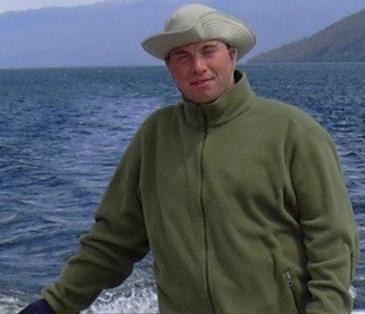
Mohammad Tamim Nuristani, the newly-appointed governor of Nuristan,
said in an exclusive interview with IRIN, that Nuristanis were faced
with an extremely poor humanitarian situation and called on aid
agencies and central government to revise their activities in the
remote province.
Many national and international NGOs have scaled back activities in
Nuristan because of insecurity on the ground. The last operational
NGO in the troubled valley, Afghan Aid, ceased operations after an
armed attack on its sub-office there. But the newly assigned
governor - an Afghan technocrat who has returned from the west -
claims the situation has changed and the way is now open for the re-
establishment of aid delivery to the destitute province.
Nurestan, meaning `land of light', lies on the southern slopes of
the Hindu Kush. The inhospitable region used to be known as
Kafiristan, or `land of the infidels' because it was inhabited by an
ethnically distinctive people, who practised animism until their
forcible conversion to Islam at the end of the nineteenth century.
Nurestanis live in isolated villages in deep, narrow mountain
valleys, surviving on subsistence agriculture, growing wheat, fruit
and raising livestock, mainly goats.
QUESTION: What is the general situation in Nuristan now?
ANSWER: The humanitarian side, we have a lot of problems. In fact
over the past hundred years no development has taken place in
Nuristan. In the last three years a lot of money came to Afghanistan
but even a drop of it was not spent on Nuristan.
We do not have good roads. The local government is not strong enough
in the province because nobody has helped us. We have problems with
insufficient numbers [in the] of police force. We do not have any
professional Nuristanis in the local government institutions and
Afghans from other parts of the country are not willing to go to
Nuristan to work due to remoteness and a lack of facilities on the
ground.
We have to start from zero. I started two and half months ago, my
priority is to build the roads between the villages and [to the]
capitals of other provinces.
Q: The aid community has marked Nuristan as a `no go area' due to
insecurity, how would you tackle this problem?
A: There is a perception that Nuristan is an insecure province but I
don't see any problems. In the last three years we had only three
major incidents involving aid workers. Security inside Nuristan is
not a major issue but how to get to Nuristan is a matter of concern.
We do not have a lot of local extremists in all parts of Nuristan,
only in Kamdish - eastern Nuristan - and that is due to a lack of
police and stronger government presence and that the district is
bordering Pakistan.
There are no border police and everything can happen in this
situation. Comparing the security of other provinces where there are
more Afghan National Army and national police forces, our problem is
very small.
If we talk about soft targets, we are now soft targets. We do not
have enough guns to protect ourselves and still we feel secure
enough. But you see, in the southern provinces of Zabul, Kandahar
and Helmand, they are killing police officers every day. They're
killing district administrators. A lot of bomb attacks are there.
While, in the whole of Nuristan, we had only one incident in Kamdish
when the office of the Afghan Aid [an International aid agency] was
set on fire and even in that case they did not kill any staff
members of the NGO. Kamdish is exceptional because it is a border
district with no border police and infiltration is easy.
We have a problem of local disputes over land and water but not the
insurgents. The local disputes do not affect NGO activities.
The problem is how to get to Nuristan and the only way to come here
is through the troubled eastern province of Kunar.
And once you enter Nuristan you will see there are no people with
guns, we don't have any major warlords, while in Kunar we see bombs,
rocket attacks and other insurgent activities. That is why a lot of
national and international NGOs do not want to pass through that
province.
In the past most of the local administration staff were not capable
of running the affairs. I am now implementing an overall reform on
the district level, which would also help with [improving] security.
Q: What are the major humanitarian problems you are faced with?
A: They are health, poverty, unemployment and a lack of roads. From
1 January we have lost the whole health coverage of the entire
province when the remaining aid agencies scaled back. In the last
six months we have had no active clinic or hospital across Nuristan.
We are very dissatisfied with the work of the ministry of health in
the province.
Prevalence of tuberculosis, whooping cough, diarrhoea and other
preventable diseases are very high in the area, as well as the rate
of maternal and child mortality. Unemployment and poverty are at
their peak and if we don't tackle these problems it will create a
huge problem for us here.
If we don't solve these problems the enemies will misuse this
opportunity and use the unemployed against us. While there is no NGO
activity and no government short-term or long-term projects, the
unemployment is rising more and more.
And due to lack of roads, people have to walk long hours and even
days to reach the nearest public facility such as a school, hospital
or clinic.
Q: How serious is the issue of local disputes and will it come to an
end?
A: We have three major (local tribal) disputes in Nuristan. One is
between the Kushtuz and Kamdish people from 12 years now. Another is
(between the) Arans and Wigal and again it is land and water
dispute. And in western Nuristan we have the Zunya and Peyar dispute.
I have started working on reconciliation of the tribes involved in
the disputes. With the issue of Kamdish and Kushtuz, with the help
of UNAMA [United Nations Assistance Mission in Afghanistan] we are
very close to solving the dispute there. The resolution of disputes
takes a bit of time as it has been there for very long and a lot of
people have been killed or disabled and even the entire Kushtuz
village had been burnt.
Q: What are the means of security in the province?
A: Nuristan is more managed by community councils than police and
army. Traditionally the Shuras [councils] are the decision-makers
and always consult with people. People also listen and obey what
Shuras decide. In fact a community support is more sustainable than
support of thousands of troops.
But still we need police and army for the security of borders and
districts. We don't have enough police and security resources. We
need the Afghan National Army and much more police to fill the gap
mainly in the districts.
In the entire province we have 560 police officers and in the huge
area of Nuristan, which has a 250 kilometre long border with
Pakistan, it is impossible to maintain security without a proper and
well-trained border police force. We rely on people and that is why,
even without police, the situation is under control.
Q: What is your message to NGOs, central government and the donor
community?
A: In the last two and a half months I have been knocking every door
including the United Nations. I call on the donors and NGOs to come
to Nuristan and see if there is any major security problem now.
We did not have any Al-Qaida [militants] before and Nuristanis were
not with Taliban either. The province was a base for anti-Taliban
groups. All you see is in the computers and emails of NGOs and
donors that `Nuristan is a no go area'. The UN says they cannot work
there because it is insecure but I hope everybody come and see what
is going on here.
Even the US-led provincial reconstruction teams (PRTs), which are
stationed in neighbouring Kunar, are not doing any major assistance
in terms of security or reconstruction in Nuristan.
Meanwhile we have been neglected by the central government because
Nuristan has been rather a calm province and never a centre of
attention for Kabul. We did not have warlords, no major attacks and
maybe therefore there is no national police or national army
deployed. Often, in some ministries, they do not even know if there
is a Nuristan, as we never come under debate.
Q: What are your top priorities of short and long-term projects?
A: I am appealing to everybody to help us, especially on the road
construction. I am working on a plan to extend 37 km road from the
central valley to Laghman, which will then be a shortcut to Nuristan
and you will not have to pass through Kunar.
Meanwhile, I think reviving tourism in Nuristan will be a key issue
in boosting the economy and infrastructure in this historical and
spectacular province.
We have had some discussion with the ministry of information,
culture and tourism to start some tourist helicopter flights from
Kabul to Nuristan, like the Kabul-Bamyan tourist flights they have
already started.
We can arrange hiking, trailing, rafting, fishing, birdwatching and
many other things, as Nuristan is a paradise of nature. In winter we
can provide skiing. We don't have any development funds but we have
talked with some private sector enterprises to establish hotels and
other facilities for visitors.